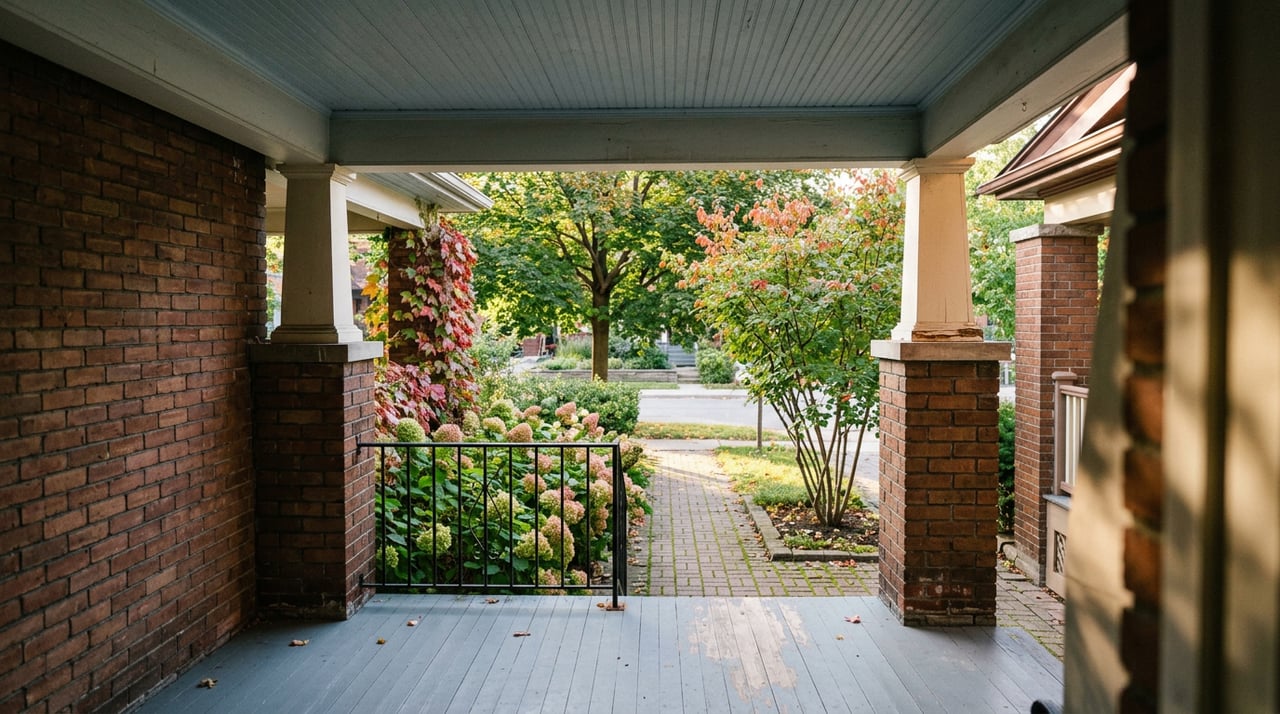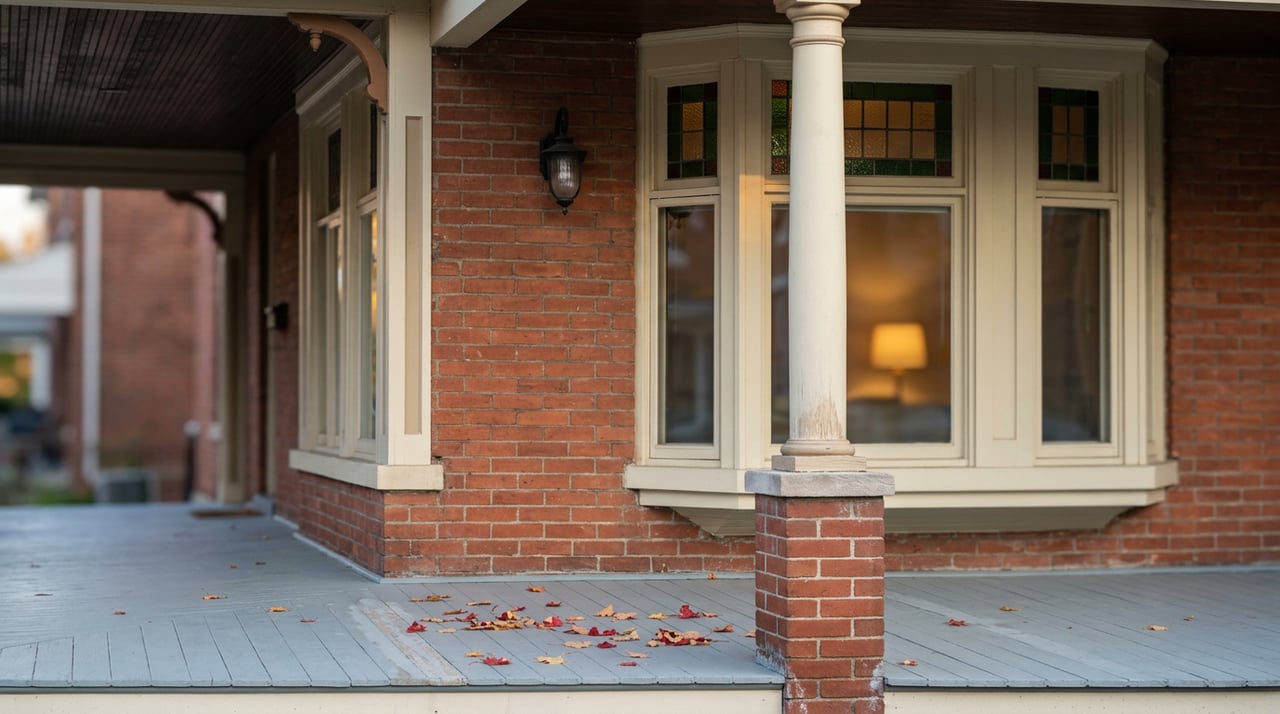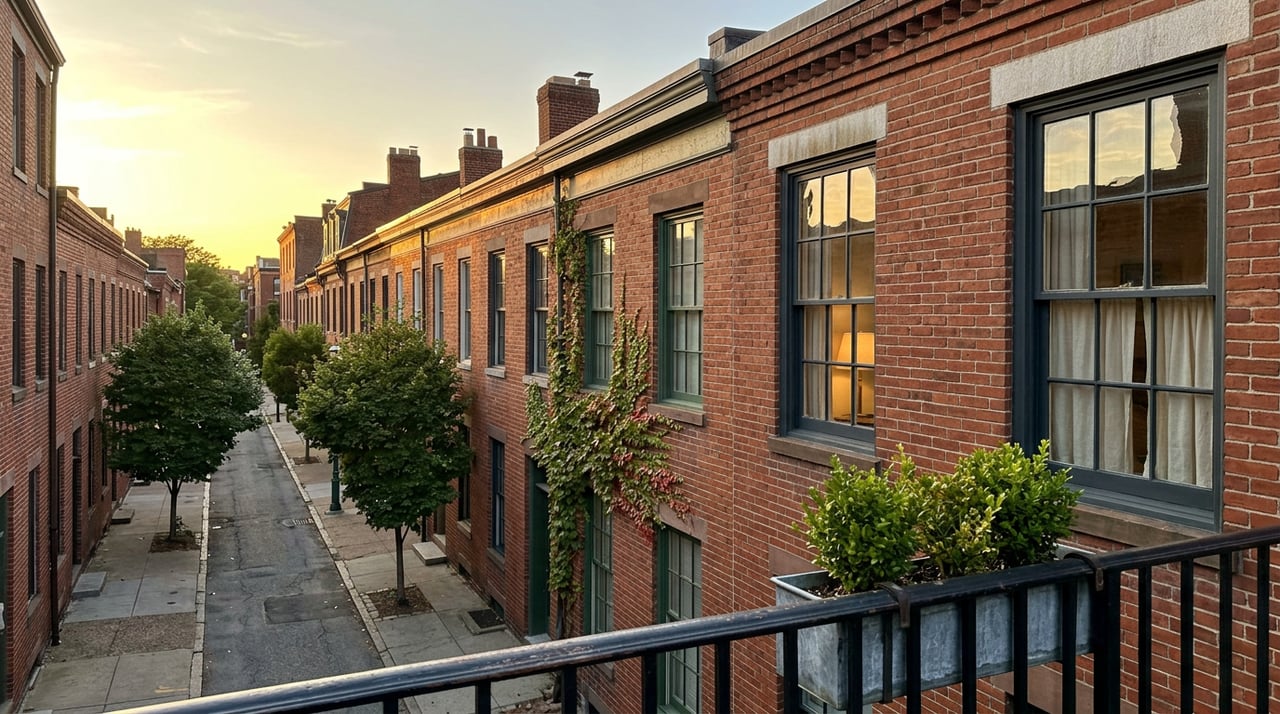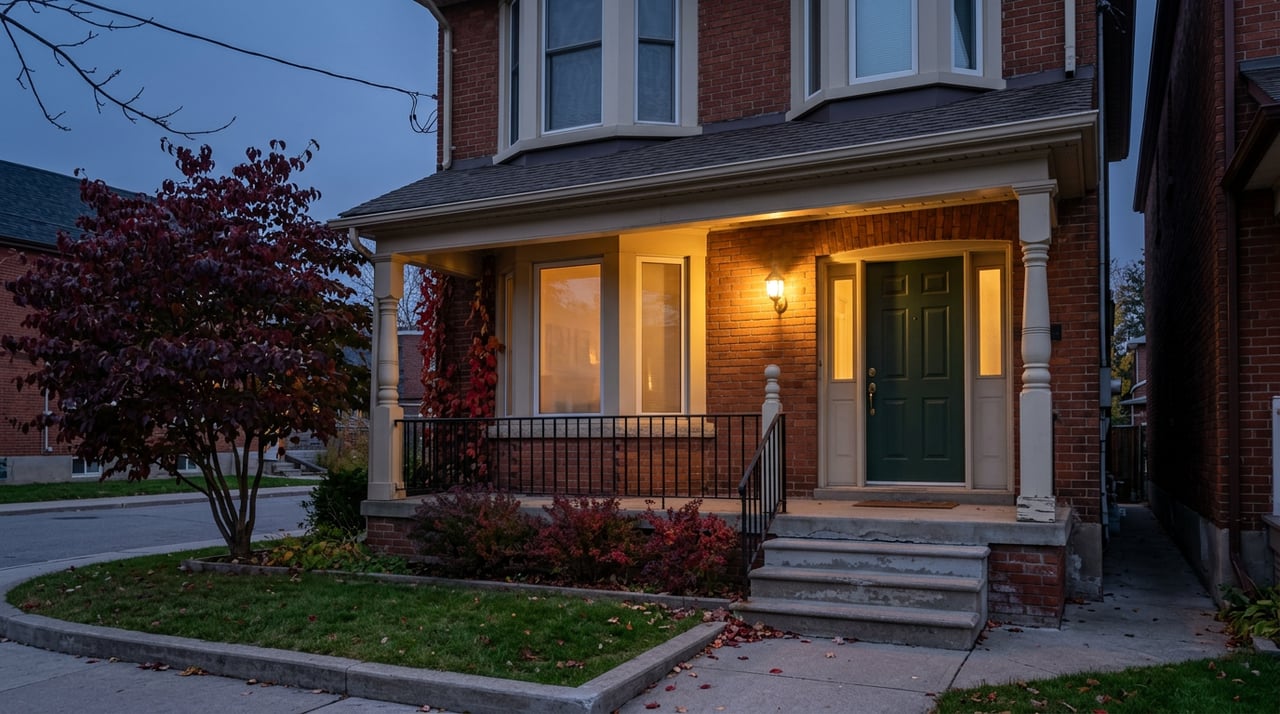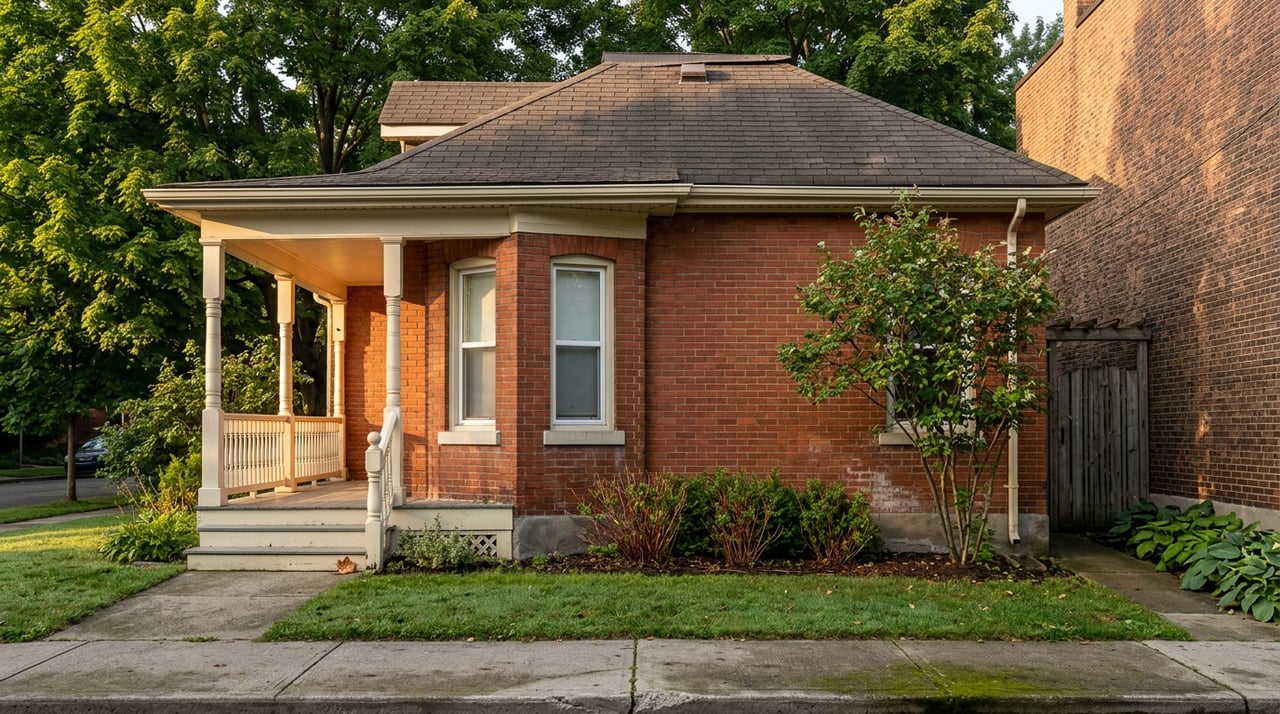
Walk one block south from Annette Street toward Bloor and you cross a market boundary that no listing portal will show you. On the semi-detached streets, a well-prepared house is under contract in nine days. On the condo corridor along Bloor and Quebec Avenue, sellers are trimming asks and offering flexibility they would not have entertained a year ago.
Both segments share a postal code. They do not share a market.
The number that lies to you
The current blended average in High Park North sits near $1.29 million, with homes moving in about 17 days and a sale-to-list ratio above 102% as of mid-2026. Read that number in isolation and you would guess a straightforward seller's market. Break it apart and the picture changes.
TRREB's W01 district, which covers Roncesvalles, High Park, and Parkdale, tells a cleaner story. As of the March 2026 HPI benchmarks:
| Segment | W01 Benchmark | YoY Change |
|---|---|---|
| Detached | $2,110,800 | −2.32% |
| Composite | $1,032,100 | −6.63% |
| Apartment | $539,200 | −15.65% |
A benchmark drop of nearly 16% on apartments against a 2.3% dip on detached is not a rounding error. It is two different markets responding to two different sets of buyers under two different sets of pressures.
Why the split runs deeper here than in the next neighbourhood over
High Park North is unusual in Toronto's west end for the sheer density of its apartment stock. Roughly 60% of the buildings in the neighbourhood are large apartment buildings, most of them built during the 1960s and 70s tower boom that followed the Bloor-Danforth subway. Renters occupy about two-thirds of the units, well above the citywide split.
That housing mix is why the neighbourhood behaves like two markets stacked on top of each other. The Edwardian semi-detached streets north of Bloor share almost no buyer pool with the towers along Quebec Avenue and Gothic Avenue. A buyer looking at 50-100 Quebec Avenue at High Park Green, a 25-storey, 904-unit building from 1977, is running a completely different math problem from the family stretching for a semi on Pacific or Oakmount.
The macro pressures on that condo pool are not letting up. TD Economics expects the GTA condo correction to run into 2028 with a cumulative peak-to-trough decline near 25 to 30%. Investor demand is weak, national rents have declined for 16 consecutive months, and the 2026 federal immigration target dropped from 464,000 permanent residents to 380,000. None of that hits the buyer looking for a family-sized semi. All of it hits the buyer of a one-bedroom on Bloor.
The mechanism is straightforward: the freehold market clears on scarcity, the condo market clears on carrying costs. When those two forces move in opposite directions, an average price becomes noise.
What a million dollars actually buys
On the freehold side
W1 detached homes across the west end had fewer than two months of inventory in 2026 and averaged only nine days on market. Detached listings in High Park North are moving at an average price above $1.5 million, with roughly 43% selling above asking. A million dollars will not typically get a detached house on these streets in decent condition. It will get you a semi that needs work, or a renovated semi at the eastern edge near the rail corridor. Multiple offers on well-prepared houses are still the norm, not the exception.
Practical translation: if you are a move-up buyer looking at freeholds here, deposit certified, financing arranged, and inspection strategy decided before you walk into a first showing. The market is not giving you a second chance on a good semi.
On the condo side
The same million dollars is a completely different weapon in a building. Condo asking prices in the neighbourhood run from the high-$300s for smaller resale units into the mid-$900s for larger suites. The High Park at 1990 Bloor Street West, an 11-storey, 108-unit boutique building completed in 2017, transacts at around $1,039 per square foot on recent activity. HighPark Condominiums at 1830 Bloor Street West, the 14-storey, 386-unit Daniels project from 2015, is the other benchmark building buyers keep comparing to. Older stock along Quebec Avenue trades at a discount to both.
Where the freehold market punishes hesitation, the condo market currently rewards it. GTA condo apartment sales in June 2026 were up 13.5% year over year while prices continued to fall roughly 9% annually. Buyers are re-entering, but only at prices that work for them. Sellers who insist on 2022 comparables are still sitting.
The pipeline nobody has priced in yet
The condo supply picture in High Park North gets one more twist that most buyers miss. Clifton Blake has a proposal in the pipeline for a 17-storey mixed-use building at 1930-1938 Bloor Street West and 3-21 Quebec Avenue, directly beside High Park Station. The design, by Baron Nelson Architects, calls for 132 condominium units, most of them family-sized multi-bedroom suites, plus 12 replacement rental units. If approved and built, it lands into a segment already digesting an oversupply from the pre-construction wave and would compete directly with existing product on the Bloor corridor.
For a buyer today, that pipeline is a negotiating point in older buildings with weaker amenities. For a seller in the same buildings, it is a reason to price for the market you are in rather than the one you remember.
How to read a High Park North listing in 2026
The listing tells you less than the address does. Before you write an offer, run through this quickly:
- North or south of Bloor? North puts you in freehold territory where speed matters. South, or on Bloor itself, puts you in condo territory where patience pays.
- Which subway station is closest? Keele, High Park, and Runnymede all sit on Line 2, but the walk-shed shapes competing inventory. High Park Station is where the new supply is landing.
- What is the building's investor concentration? Older Quebec Avenue towers have deeper investor ownership than newer boutique buildings, and that changes how motivated a seller is likely to be right now.
- How long has the unit really been listed? A 20-day listing that was previously listed twice is not a 20-day listing. Ask the agent to walk you through the property history before you anchor on the current ask.
- Freehold or condo comparables in the CMA? Any comparable market analysis blending the two segments in this neighbourhood is doing the buyer or seller a disservice. The averages do not translate across the split.
FAQ
Is High Park North a buyer's market or a seller's market right now? Both, depending on segment. Freehold houses remain firmly in seller's territory with tight inventory and quick sales. Condo apartments are in buyer's territory, with elevated supply and downward price pressure that leading forecasters expect to continue into 2027.
Why are condos here down so much more than freeholds? Condo prices are being pulled by investor economics, not owner-occupier economics. Falling rents, weaker population growth, and elevated carrying costs have thinned investor demand across the GTA, and neighbourhoods with heavy tower stock feel it more. Freehold prices are supported by owner-occupier scarcity, which is not moving.
Does the new proposed development at Bloor and Quebec affect what I should offer today? On a resale semi north of Annette, no. On a resale condo along Bloor, yes. Additional family-sized supply that close to High Park Station is a real factor in how boutique buildings on the same corridor will price over the next few years.
Working with the split
The mistake most buyers make in High Park North is treating it as a single market and applying a single strategy. The mistake most sellers make is pricing against comparables from the wrong side of the split. In a neighbourhood where a nine-day semi sits three blocks from a condo listing entering its third month, generic advice is expensive.
If you are weighing an offer here, or trying to decide whether this is the year to list, we are happy to walk through the specific block, building, and comparable set with you. Reach out to Kim Kehoe and we will show you what the average price is hiding.