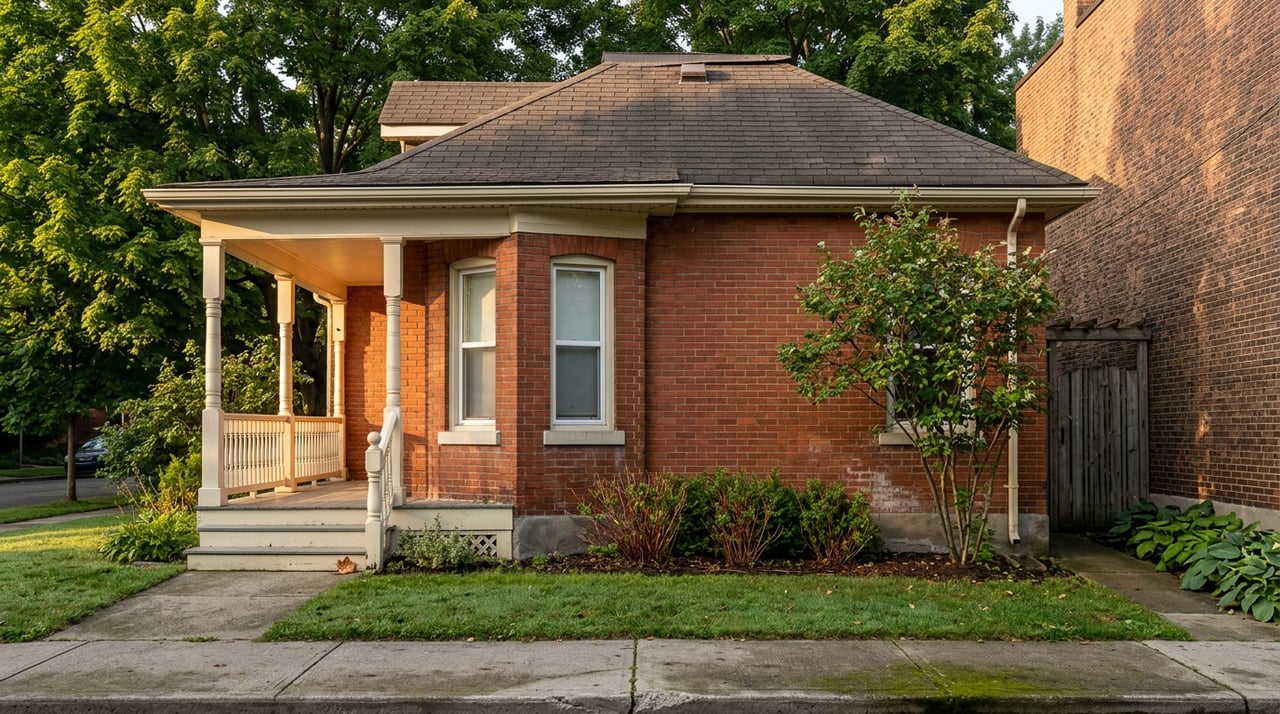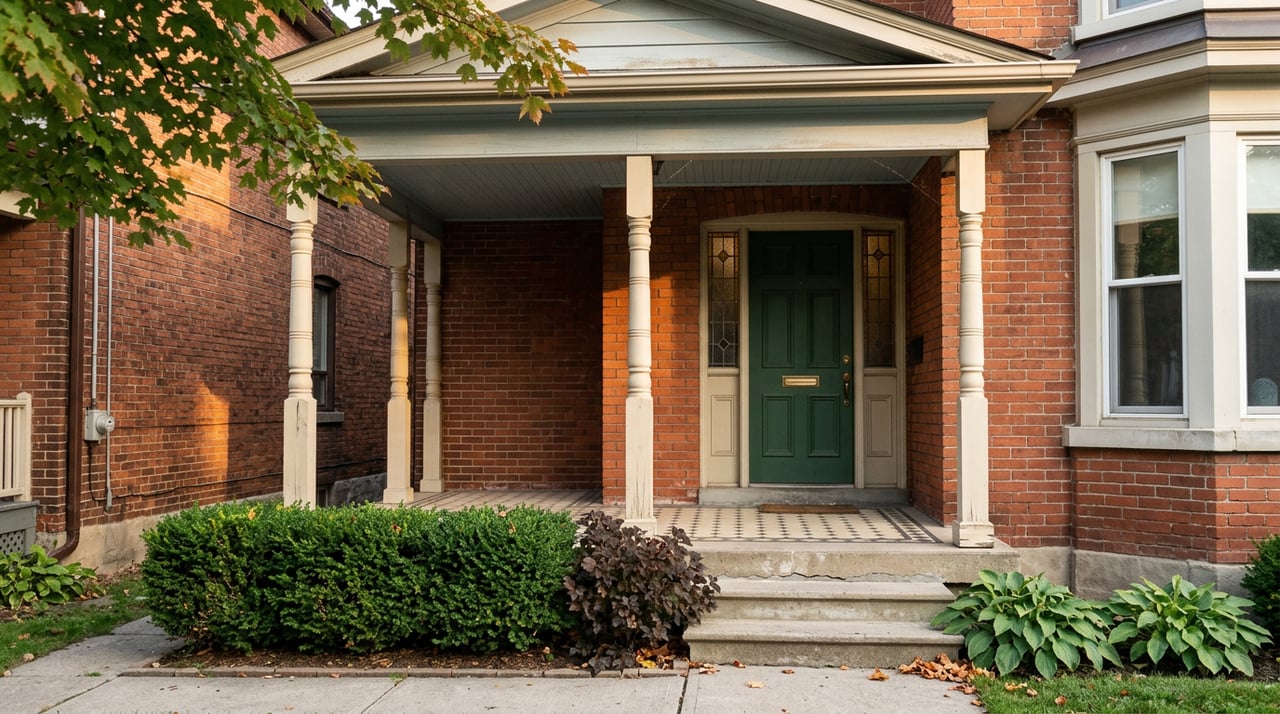
In Parkdale, a licensed multi-tenant house does not sell the way a single-family home does. The building can be worth more because of the income it generates, but the paperwork that makes that income legal does not travel with the deed. Toronto treats every change of ownership as if it were a brand-new licence application, and under bylaw amendments that took effect this year, that reset can catch a seller mid-transaction with no warning at all.
Most owners assume a multi-tenant house licence works like a business licence attached to an address. It doesn't. It's attached to the operator, the person named as owning or responsible for running the house. Sell the property, and the City's own guidance is direct about what happens next: a new licence application has to be submitted before you sell or transfer, and you're required to notify Municipal Licensing and Standards of the ownership change as a separate step. The house doesn't carry its compliance history into the next owner's name. The next owner starts over.
What Changed on February 15, 2026
City Council approved amendments to the Multi-Tenant Houses Bylaw in December 2025, and they took effect this past February. The headline change sounds like it should make life easier for operators: a zoning review from Toronto Building is now required only when someone first applies for a licence, not at renewal. If you've held a compliant licence for years, your annual renewal is now a lighter lift than it used to be.
Here's the part that doesn't get said out loud enough. For a buyer stepping into ownership of a Parkdale multi-tenant house, the sale is the first application. It doesn't matter that the previous owner sailed through renewals for a decade without incident. The zoning review that current licence holders no longer have to repeat is exactly the review a new owner has to pass, on a timeline set by the City, not by your closing date.
What a Buyer's Lender Will Actually Ask to See
This is where the paperwork stops being abstract and starts affecting whether money moves on closing day.
| Document | What It Proves | Who Issues It |
|---|---|---|
| Multi-Tenant House Licence, in the new owner's name | Legal permission to operate the property as a licensed multi-tenant house | City of Toronto, Municipal Licensing and Standards |
| Zoning Applicable Law Certificate | Confirms the property's room count and configuration meet zoning | Toronto Building |
| Fire Safety Plan approval | Confirms the building meets Ontario Fire Code separation and egress rules | Toronto Fire Services |
| Property maintenance plan | Documents pest management, waste collection, and tenant service processes | Filed by the operator with the City |
| Change-of-ownership notice | Confirms the City has the correct operator of record | Filed by seller or buyer |
A lender underwriting a purchase on a licensed multi-tenant house wants to see that the income the buyer is counting on is legal income, tied to a licence that actually exists in the buyer's name. Until it does, that column of the deal is blank.
Why This Sits Heavier in Parkdale Than Elsewhere
Parkdale's housing stock makes this more than a theoretical risk. The neighbourhood is full of grand Victorian and Edwardian semis, many built with the room count and layout that made them natural fits for rooming and lodging use long before the current bylaw existed. The Parkdale Village BIA, established in 1978 and representing more than 200 businesses along Queen Street West between Roncesvalles Avenue and Dufferin Street, sits in the middle of a stretch where multi-tenant houses have operated for generations, licensed or not. Development and property concerns in the area run through Ward 4 councillor Gord Perks, which tells you how localized this conversation actually is.
The market is already pricing some of this in. A June 2026 report from the valuation tracker HonestDoor put the average South Parkdale house price around $1,394,110, down roughly 2 percent from the prior period. Compare that with Roncesvalles at about $1,639,312 and High Park-Swansea at roughly $2,394,333 for the same stretch of time. Some of that gap is lot size and finish level. Some of it is the licensing overhang buyers and their agents already factor into an offer on a larger Parkdale house that is, or could become, a licensed multi-tenant property.
That gap matters more right now because the broader market has tightened. WOWA's August 5, 2026 update on the Toronto housing market showed the GTA's sales-to-new-listings ratio climbing to 41.4 percent in July 2026, up from 39.2 percent in June and 34.6 percent a year earlier, while months of supply fell from 4.9 in July 2025 to 4.4 in July 2026. TRREB's June 2026 figures put the average Toronto resale price at $940,800, down 5.4 percent year over year, with single-family homes averaging $1,149,900. A tighter market with softer prices means the investors who buy multi-tenant properties have more room to walk away from a deal that stalls at the licensing office, because they have more competing listings to consider than they did a year ago. A paperwork delay that used to be an inconvenience is now a reason to lose the buyer entirely.
What to Gather Before You List
- Pull your current licence and confirm exactly which rooms and floors it covers, not just how many rooms happen to be rented today.
- Ask Toronto Building directly whether a fresh zoning review applies to your specific sale, since that requirement resets with ownership regardless of the February 2026 renewal changes.
- Have your Fire Safety Plan approval on hand and check the date on it. Lenders want current documentation, not a filing from several years ago.
- Confirm your property maintenance plan and emergency contact designation match what's actually on file with the City.
- Notify Municipal Licensing and Standards of the pending ownership change in writing before you accept an offer, not after.
- Give your buyer's agent and lender a realistic estimate of how long a new licence application takes, so financing conditions aren't written on the assumption the licence simply carries over.
The Moment This Actually Breaks a Deal
Picture a financing condition written around a licence that doesn't exist yet in the buyer's name. If the City hasn't issued it by the firm date, the lender won't release funds, the buyer needs an extension, and the seller is now renegotiating from a weaker position in a market that has just started tightening back up. The stakes go beyond an awkward delay. Non-compliance with the Multi-Tenant Houses Bylaw carries fines of up to $100,000, which is a number worth having in the room when you're deciding whether to handle this before listing or after an accepted offer.
A Few Questions Worth Asking Directly
Does this apply if I've already reduced the house back to a single dwelling? If the property no longer meets the four-or-more-room definition of a multi-tenant house, the licensing requirement doesn't apply. Get that change confirmed in writing rather than assuming it, since a lender may still ask for proof.
Can the buyer start the licence application before closing? Yes, and this is usually the smoother path. A buyer can begin the zoning review and application once there's an accepted offer, but they need the seller's cooperation on property access and documentation to move quickly.
What if my licence predates the March 2024 framework and never went through a zoning review at all? The sale still triggers the requirement for the new owner. The zoning review your original licence never had to face is now built into any first application, which functionally includes the buyer's.
If you own a Parkdale house that operates, or could operate, as a licensed multi-tenant property, the time to sort out where you stand with the City is before you put a sign in the ground, not after an offer lands on your desk. Kim Kehoe and her team have spent years walking West Toronto sellers through exactly this kind of paperwork, and we'd rather have the conversation now than during a financing scramble two weeks before closing. Reach out and we'll help you figure out what your specific house needs before it goes to market.